week 3 Analogy/Homology
Analogy/Homology


The two species that posses the homologous trait are whales and horses. The forearm is the homologous trait. The forearm in both mammals function the same where they allow the animal to move but in different ways. Both horse and whale come from a common decedent of a mammal. The main difference in both mammals is their primary function.The whale had a more of a swampy river environment which develops fins to make it more suitable for its environment. That is why the forearm is smaller because it does not need the pressure of gravity. The horse because it needs to run on land has a bigger forearm to support itself when running and the pressure of gravity when sprinting across the land. One is meant for running on land while the other is made to tread through the oceans water. These mammals are related because both have the similar bone structure on specifically being the forearm so we can assume that they came from a common ancestor. We can make this theory because for a homologous trait to work it needs to be similar in origin but does not have to be similar in function.
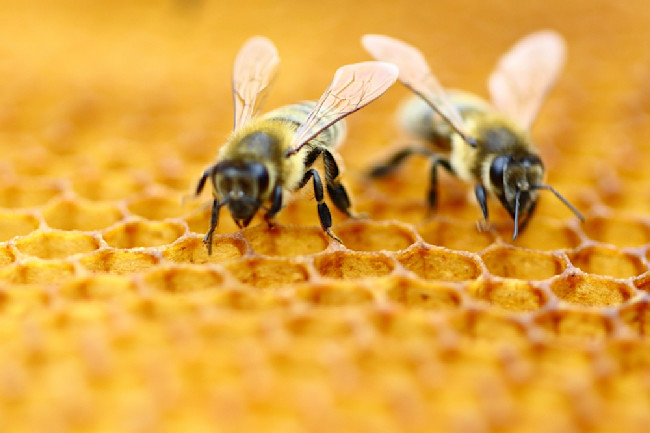

These two species are of birds and insects. Their wings that allow them to fly is the analogous trait. Both of these flying creatures have a similar function but not similar in origin. The wings of both insect and bird are different but allow them to do different things. The bee can hover and fly so it can allow itself to pollinate flowers while the parrot can not hover but it can soar through the sky. The parrot and bird are not related because on is an insect and comes from the wasp family while the parrot comes from a previous line of birds.

My kingdom for a paragraph break! :-) Seriously, though, these are blogs but they should still be treated as papers, complete with correct formatting and breaking topics/prompts into separate paragraphs. It is very difficult to parse out where you address the different questions. Don't make it hard for me to grade your work.
ReplyDeleteYou kind of jump right into the discussion of the trait comparisons, but the opening section in both the homologous and analogous areas asked for a description of your species, not just identification of the species or the traits. This would help your reader understand the environment and behavior of the species to better understand why their traits evolved the way they did. Needed to be expanded.
Homology: Good description of the differences in structure and function of these traits and tying that in with differences with environmental pressures.
"so we can assume that they came from a common ancestor."
No, no unsupported assumptions are allowed in science. And we don't need to make this assumption because we have fossil and phylogenetic evidence of this relationship. Both horse and whales are mammals, so we know that the common ancestor would be an archaic mammal. We also know from the fossil record that early mammals possessed that generalized mammalian limb structure and passed that onto these two descendant species, with changes concurring over time due to differences in the environment (aquatic vs. terrestrial). That is what we need to know to confirm common genetic origin and confirm homology.
Analogy:
Okay on your trait description but recognize that the guidelines asked you to focus on the similarities. These traits did not arise from common descent, so the differences aren't surprising. It's the similarities that needed to be explained.
"The parrot and bird are not related because on is an insect and comes from the wasp family while the parrot comes from a previous line of birds."
I think you meant "parrot and bee"? Regardless, that doesn't mean they don't share a common ancestor and genetic distance is not sufficient to assume analogy. So how do we use ancestry to confirm analogy here? It is difficult to guess at what the common ancestor of the bird and bee looked like some 100's of millions of years ago... it may have possessed wings or it may not have, but fortunately, we don't need to know that to confirm that these traits are analogous. While it is possible that the bee inherited its wings from that common ancestor, what about the bird? We know quite a bit about bird and bird-wing evolution. Birds evolved wings as they split from reptiles, and this occurred long, long after the split with that common ancestor with the bee. This means bird wing evolution occurred independently from that common ancestor with the bee. That is sufficient to confirm that these are not the product of common descent and are indeed analogous.
Good images.
Hello,
ReplyDeleteI really liked your choices for the homologus and analogus traits. They are very different from most people in the class. I would have never guessed that a whale and a horse has a common ancestor but, it seems like we can be surprised everyday. I also liked that you chose the parrot and the bee. They are substantially different in size so it was interesting that they do share some common traits but, are not related. Good post could have been a bit longer. Keep up the great work!
Hey fellow classmate,
ReplyDeleteI also do think that you have interesting pairs of homologous and analogous species. When saying "That is why the forearm is smaller because it does not need the pressure of gravity" as a physics major myself I must correct you and say that gravity doesn't exert pressure it's a force. Also i notice that there are small grammatical errors, maybe have someone read through your post and edit it once it's been published.
For example, "The horse because it needs to run on land has a bigger forearm to support itself when running and the pressure of gravity when sprinting across the land" just doesn't make sense.
I also do also like to see resources or links to where people get their information in case I see something interesting, maybe next time include that.
Hi, I find it interesting and something I never thought about before taking this class that a horse and a whale could share a common ancestor. A great choice in comparing the Homologous trait of the forearms. I can see it now that I read your post. I also love your choice of the bee and a parrot for the analogous section.
ReplyDeleteGood evening,
DeleteI think that your homologous traits between the whale and the horse is a good comparison. Both are mammals who evolved in accordance with their atmosphere. The homologous trait you highlight is the forearm which between the horse and the whale has a different primary function. I liked your description of these functions and the reasons why they evolved the way they did. You mentioned that that whale evolutionary development of the forearms into fins came from the need to swim due to living in a swampy river environment. The horse forearms developed to be big and muscular because of the necessity to support itself when sprinting across land. These are both homologous traits that I was not aware of.
I liked the way you described the analogous trait of the bird (parrot) and the insect (bee). Both have the similar function of flying but are not from the same ancestor. I also like how you included the different functions of their wings whereas the bird uses its wing to soar through the sky and the bee uses its wings to hover for pollinating. Good homologous and analogous comparisons.